FORT WAYNE, Ind., September 30, 2026 - Tri-County Commercial Roofing LLC is drawing attention to maintenance and energy-cost patterns that can signal that an aging commercial roofing system is becoming more expensive to keep in service. The company is highlighting recurring leaks, repeated service calls, rising utility bills, and ponding water as conditions property owners can track when deciding whether continued repairs remain financially practical.
The announcement brings together two cost concerns that may appear separately on building budgets. As roofs age, owners can face more frequent repairs while damaged insulation, open seams, or declining surface reflectivity may contribute to higher heating and cooling demands.
Recurring Problems Can Signal a Shift in Roof Costs
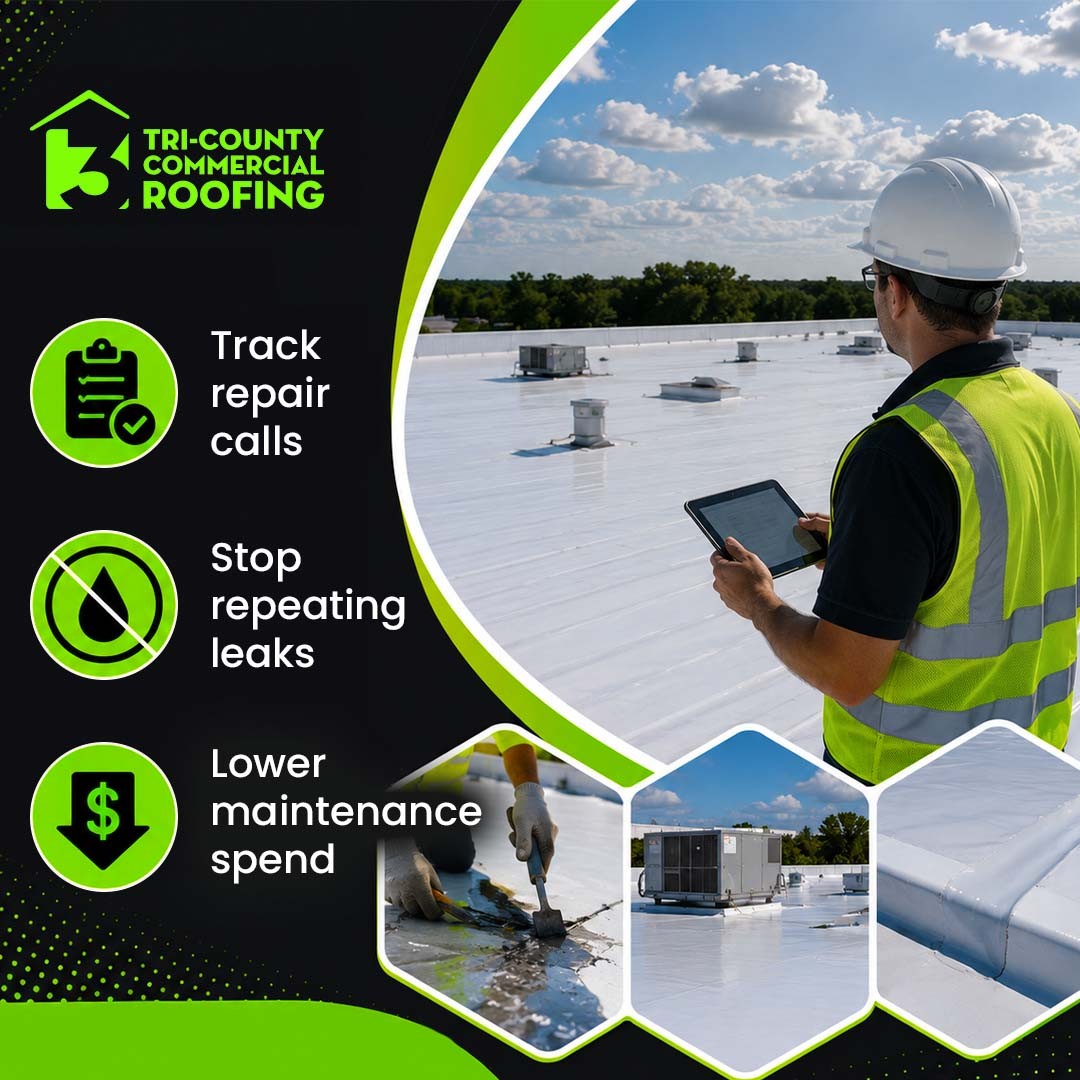
Tri-County Commercial Roofing identifies more than two repair visits in a year as one indication that a roof may be moving beyond an efficient repair cycle. Other warning signs include leaks appearing in different locations, recurring ceiling stains, separating seams, rusted flashing, and water remaining on the roof for more than 48 hours after rainfall.
The pattern matters because isolated damage and widespread deterioration present different financial considerations. A single localized problem may call for commercial roof repair, while recurring failures across multiple areas can indicate that the condition of the broader roof system needs to be assessed.
Age Can Change the Scope of Repairs
Material deterioration can become more widespread as a roof approaches the later years of its service life. On membrane systems, moisture can travel beneath the surface and reach insulation before water becomes visible inside the building.
Metal systems present different age-related concerns. Repeated thermal movement can affect fasteners, seams, and sealants over time, turning a small maintenance issue into work across a much larger section of the roof.
“When repairs start happening repeatedly, or utility costs rise without another clear cause, property owners should look at the condition of the roof as a whole rather than treating each issue separately,” said Merle Bontrager, founder of Tri-County Commercial Roofing. “An inspection can show whether the problem is still isolated or whether the building is reaching the point where another repair may not address the larger cost pattern.”
Energy Bills Can Reveal Problems Before Interior Damage
Roof deterioration does not always first appear as a visible leak. Wet or compressed insulation, failing seams, and gaps around rooftop penetrations can weaken the building's thermal barrier and cause HVAC equipment to run longer to maintain indoor temperatures.
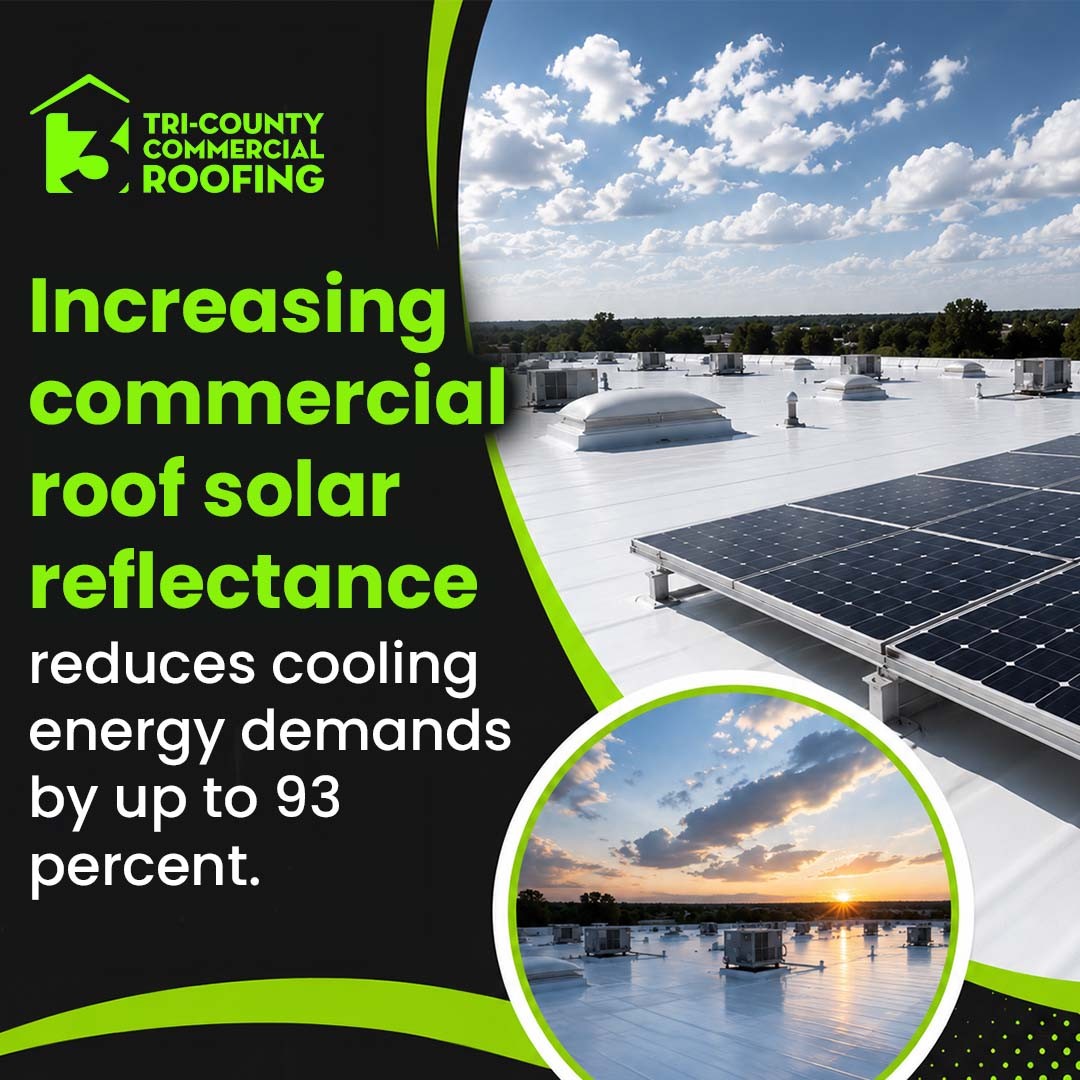
Surface condition also matters. An aged or degraded reflective membrane can absorb more solar heat than a roof that retains its reflective properties.
Research published in Frontiers in Energy Research in 2023 found that a cool roof reduced summer cooling energy use by 13.2 percent compared with a conventional roof in the conditions examined by the study. Actual results for an individual building vary with climate, insulation, roof design, and operating conditions.
Repair Decisions Shift as Deterioration Spreads
The financial question changes when patchwork begins covering a growing portion of a roof or service calls become routine. At that stage, property owners can evaluate the expected cost of continued maintenance against the longer-term cost and service life of a commercial roof replacement.
Roof age is one part of that assessment, not a decision point by itself. Condition, moisture intrusion, insulation performance, previous repairs, and the extent of membrane or metal deterioration provide additional context when determining whether another localized fix is appropriate.
Inspection Records Provide a Clearer Cost History
Regular inspection and repair records can help property owners identify whether maintenance expenses are isolated or forming a recurring pattern. Tri-County Commercial Roofing recommends inspections twice each year, generally in spring and fall, with additional checks following major storms.
For buildings nearing the later portion of their expected roof life, more frequent evaluations can provide a clearer picture of changes in seams, flashing, drainage, and insulation.
Property owners seeking a commercial roofing contractor in Fort Wayne, IN can use those findings to discuss whether maintenance, restoration, or replacement better fits the roof's current condition rather than basing the decision on age alone.
About Tri-County Commercial Roofing LLC
Tri-County Commercial Roofing LLC works with commercial property owners in Fort Wayne and nearby areas to address aging, damaged, and leaking roof systems. From its North Webster location, the company services flat, low-slope, and metal roofs at different stages of their service life.
Media Contact
Merle Bontrager, Owner
Tri-County Commercial Roofing LLC
7200 IN-13
North Webster, IN 46555
United States
Phone: (260) 248-7020
Website: tricountycommercialroofing.com